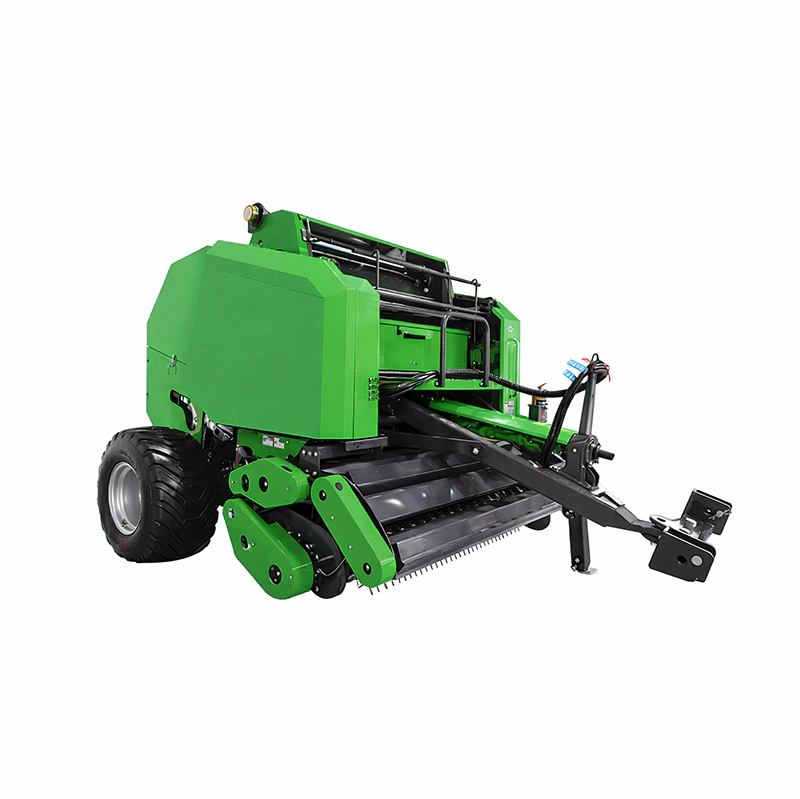
Engineered in Italy. Built for the World's Toughest Fields.
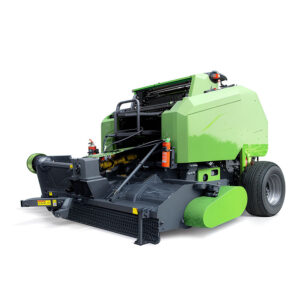
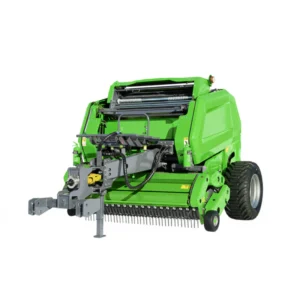
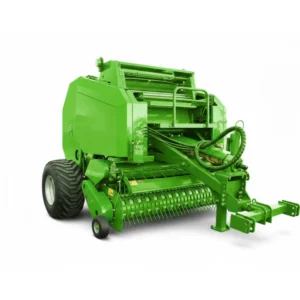
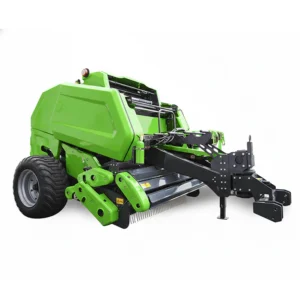
Looking for a machine that actually crushes the daily harvest without breaking a sweat? You know, over the years out in the fields, I’ve seen operators burn through equipment purely because they didn't go straight to a reliable round hay baler manufacturer. When dealing with heavy, high-moisture silage or dry, brittle straw, you need an absolute beast of a machine. As a direct Italian factory and trusted global supplier, Ever Power engineers round hay balers that deliver rock-solid, high-density bales in the toughest field conditions. We don't just assemble off-the-shelf parts; we are a dedicated maker building custom-tailored baling solutions that maximize your crop yield and virtually eliminate that infuriating midday downtime.
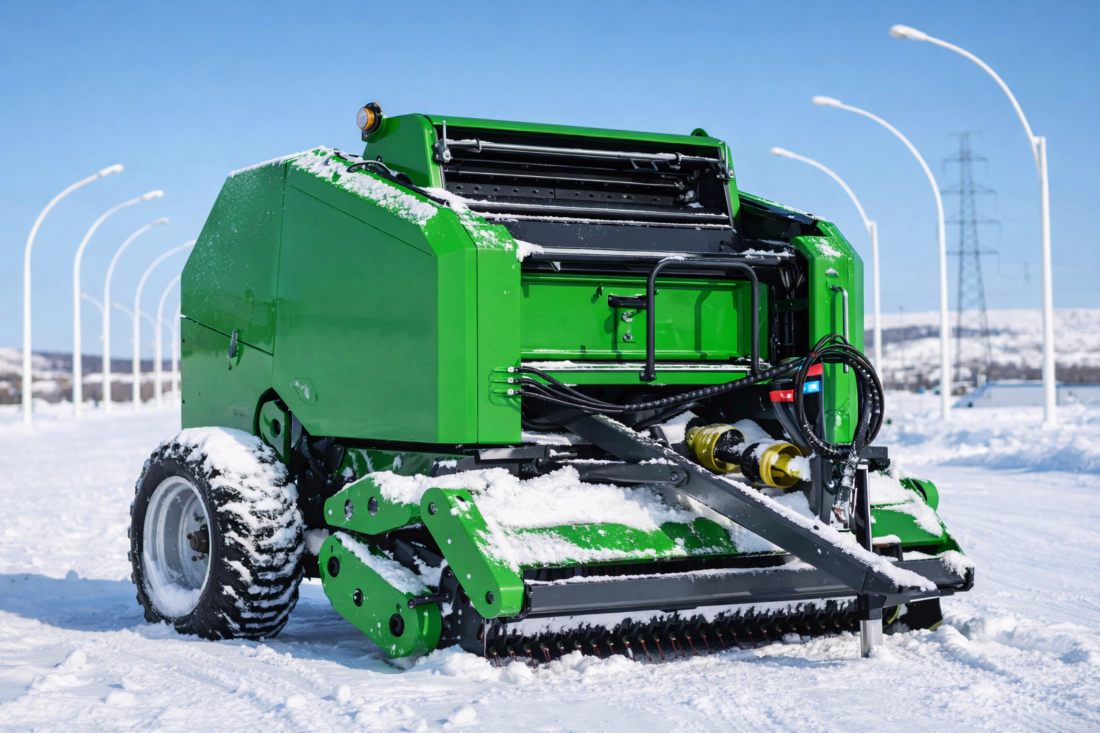
Field-Tested Overview & Operational Advantages
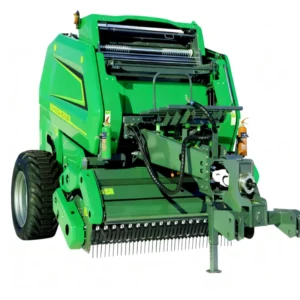
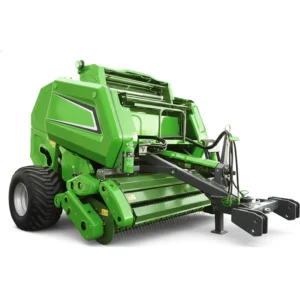
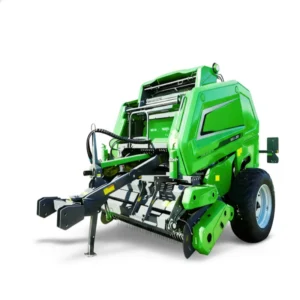
There's a massive difference between making a bale and making a good bale. In our experience, the density of the core determines the weather resistance, the nutritional retention, and ultimately, your bottom line. An Ever Power round hay baler is designed from the drawbar to the tailgate to grab every last leaf in the windrow and pack it tight. We've spent nearly two decades tweaking the geometry of the pickup and the aggressive nature of the feed rotor.
Why does this matter out in the dirt? Because when the rain is an hour away and you still have 40 acres of alfalfa down, you can't afford to slow down for lumps in the windrow. Our equipment allows you to drive faster, feed heavier, and rely on an automated tying cycle that fires perfectly every single time. The trick is our synchronized intake system; it matches the forward speed of the tractor with the rotational speed of the chamber. (It’s something a lot of cheaper brands completely overlook, leading to those frustrating hourglass-shaped bales that fall apart on the trailer). By optimizing the crop flow, we minimize leaf loss in delicate crops while maintaining the aggression needed to swallow heavy corn stover.
| Axial flow semi-forced feeding system |
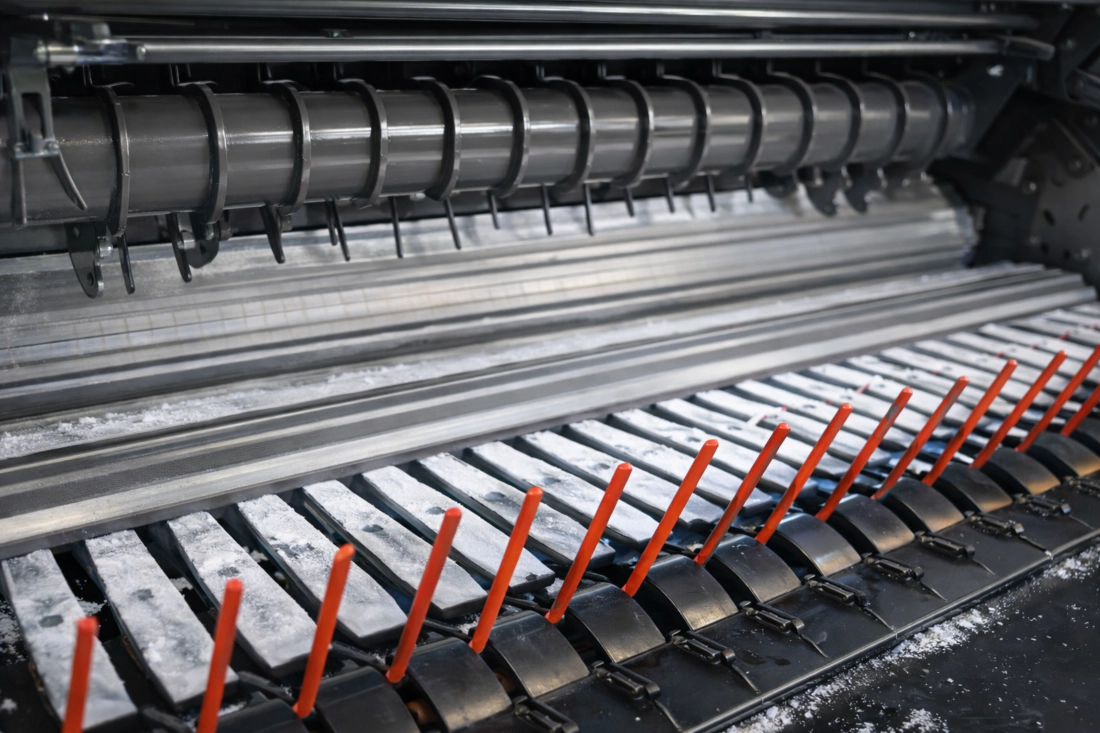 |
The entire machine uses heavy-duty chains and maintenance-free bearings, resulting in a lower failure rate and simpler maintenance. The entire machine uses manganese plate wear-resistant material from Ansteel, which has high strength and long service life, superior to ordinary plate material, and eliminates the possibility of silo explosion.
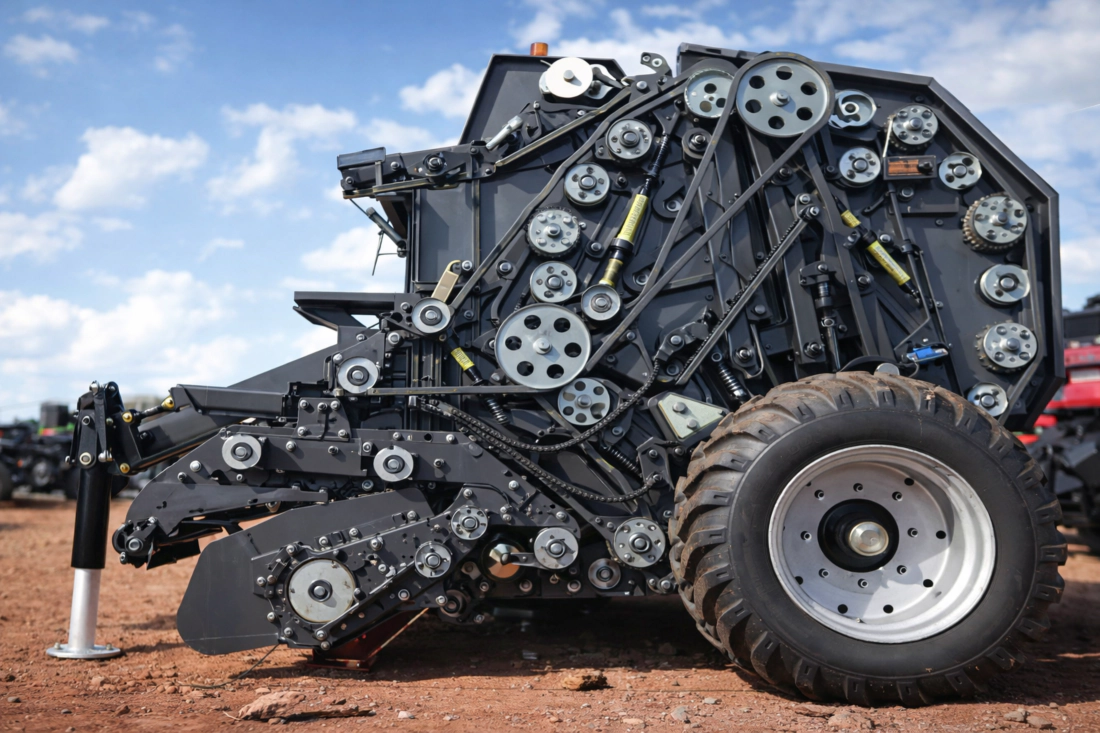
Technical Specifications Matrix
| Item | Unit | Specification |
|---|---|---|
| Model Name | / | 9EP-2.24D Round Baler |
| Hitch Type | / | Trailed |
| Pickup Width | mm | 2240 |
| Pickup Structure | / | Spring Tooth Type |
| Feeder Structure | / | Picker Roll + Roller Type |
| Baling Chamber Mechanism | / | Roller Type |
| Baling Chamber Width | mm | 1400 |
| Baling Chamber Diameter | mm | Φ1200 |
| Number of Rolling Components | pcs | 18 (Rollers) |
| Roller Diameter | mm | Φ222 |
| Baling Method | / | Net Wrap |
| Matching Power | kw | 55-100 |
| Overall Machine Weight | kg | 3922 |
| PTO Speed | r/min | 720 |
| Overall Dimensions (L×W×H) | mm | 4110×3010×2450 |
| Bale Density Control | / | Sensor Control |
| Bale Size (Diameter × Width) | - | 1300×1400 mm (Approx. 1.85 m³ per bale) |
| Bale Density | Kg/m³ | 100-200 |
| Productivity | bales/h | 40-100 |
| Wheelbase | mm | 2600 |
| Working Speed | Km/h | 5-35 |
| Net Wrap Specification (L×W) | m | 2000×1.4 (per bale) |
The 6 Core Advantages of Ever Power Engineering
I get asked all the time what makes our gear different from the mass-produced stuff sitting on dealer lots. It comes down to over-engineering the fail points. We’ve seen where conventional balers break, and we’ve simply built those areas thicker, smarter, and more resilient.
- ⚙️ 1. Hydraulic Drop-Floor Unblocking
Let’s be real, everyone plugs a baler eventually. Usually, it’s when you hit a wet, massive lump of forage at the end of the day. Instead of crawling under the machine with a pry bar (we've all been there!), our hydraulic drop floor lets you lower the cutting floor from the tractor cab, engage the PTO to clear the plug, and get back to work in 15 seconds. It is a massive sanity saver. - ⚙️ 2. Camless Pickup Technology
Traditional cam-tracks have dozens of moving bearings operating in dusty, high-vibration environments. They wear out, and they are a nightmare to rebuild. We utilize a high-speed camless pickup. Fewer moving parts mean lower maintenance, higher operational speeds, and less chance of catastrophic failure during the peak of your harvest. - ⚙️ 3. Severe-Duty Roller Bearings & Auto-Lube
The heart of a round hay baler is its rollers. We use oversized, double-row spherical roller bearings designed for the mining industry, frankly. Paired with an automated central greasing system, you’re not spending your morning pumping grease into 40 different zerks. The machine lubes itself while you bale. - ⚙️ 4. Ultra-Fast Net Injection System
Waiting for a bale to wrap feels like an eternity when you're racing the sunset. Our net wrap system physically injects the net right into the chamber gap using a powered roller, rather than relying on gravity and crop flow. This means it catches the bale instantly, giving you a tight edge-to-cover wrap in a fraction of the normal cycle time. - ⚙️ 5. ISOBUS Terminal Integration
No more cluttered tractor cabs with five different monitor screens. Our balers plug straight into your tractor's existing ISOBUS screen. You can adjust bale density, monitor moisture levels, and select knife banks right from the interface you already know. - ⚙️ 6. Customizable Cutting Rotors
If you are baling silage, you want it chopped short for better fermentation and easier mixing in the diet feeder. We offer selectable knife banks (e.g., 0, 7, 13, or 25 knives) allowing you to change the theoretical chop length on the fly depending on what your buyer or your cattle require.
How to Choose the Right Setup for Your Operations
Most contractors don't realize that buying a baler based solely on price or local availability is a recipe for a headache. You really have to match the machine's architecture to your crop profile. I always ask my clients three things before we even talk about quoting a build.
Are you running mostly wet, heavy silage or dry hay? If you're out there baling 50% moisture ryegrass, you absolutely need a fixed chamber roller baler. Belts can slip when they get covered in sticky plant sap and dew, but steel rollers grip and compress that wet crop like a drum. On the flip side, if you are doing dry alfalfa, prairie grass, or oat hay, a variable chamber belt baler is the ticket. It starts forming a tight core from the very first handful of hay, preventing oxygen entrapment, and it allows you to change the bale diameter on the fly—from 3 feet up to 6 feet—depending on what size trailer you are loading.
You also have to look hard at your tractor's PTO horsepower. It takes a massive amount of torque to spin a fully dense 5x6 bale of wet forage. If you only have a 90 HP tractor, trying to run a heavy-duty chopper baler is just going to shear PTO bolts all day long and overheat your tractor's hydraulics. The trick is to spec the baler's gearbox and flywheel to maintain momentum without bogging down your specific power unit.
Product Applications Across the Spectrum
Our agricultural bale machinery isn't just a one-trick pony. The versatility engineered into our feed system means these units tackle a wide variety of materials:
- High-Moisture Silage/Haylage: The heavy-duty rollers and chopping knives break down the crop, packing it incredibly tight to push out oxygen, which is critical for that perfect lactic acid fermentation.
- Dry Legumes (Alfalfa/Clover): These crops are fragile. If you over-process them, the highly nutritious leaves shatter and end up as dust in the field. Our variable chambers handle these gently, preserving the feed value.
- Cereal Straw (Wheat/Barley): Straw is notoriously slick and hard to get started in a bale chamber. Our aggressive starter rollers ensure the core starts spinning immediately, preventing blockages.
- Corn Stover & Biomass: Baling behind a combine means dealing with dirt, tough stalks, and abrasive conditions. The wear-resistant Hardox steel we use in our rotor tines handles this punishment year after year.
Voices from the Field (Client Feedback)
Don't just take my word for it. We've got units running in some of the most unforgiving climates globally. Here is what the guys actually running the equipment have to say:
"Running coastal bermuda hay down here in Texas heat means dust—lots of it. Our old balers used to catch fire or wipe out bearings every season. The Ever Power unit has that auto-lube system that just works. We’ve put 15,000 bales through it, and the density is so high my guys can stack them three high without any squatting. Best farm equipment decision we made."
— Marcus T., Custom Hay Contractor, Texas, USA
"Baling wet grass for dairy silage is brutal on machines. The crop is heavy and sticky. The Italian-built fixed chamber from Ever Power handles our 45% moisture grass effortlessly. The drop floor saved my driver a solid two hours last week when he got greedy and took too wide of a swath. Dropped the floor, cleared it, wrapped it. Brilliant."
— Johannes H., Dairy Operator, Bavaria, Germany
"We do massive wheat straw runs behind headers. The straw is dry as a bone and slick. Getting a bale core to start used to be our biggest headache. The starter roller setup on this machine grabs the straw instantly. Plus, dealing direct with the factory meant we got exactly the wide pickup we needed for our Australian windrows."
— Liam R., Broadacre Farmer, New South Wales, Australia
Trend Analysis: Where is the Industry Heading?
If you're investing in capital machinery today, you need to know it's not going to be obsolete in three years. In our experience, the baling industry is moving rapidly toward Tractor Implement Management (TIM). This is where the baler actually tells the tractor what to do—slowing the tractor down when the swath gets too thick, stopping it automatically when the bale is full, and initiating the netting process without the driver touching a button.
We are also seeing a massive push toward data. Farmers want to map their yield not just at the combine, but at the baler. Modern units are integrating microwave moisture sensors and weigh scales on the discharge ramp. This allows you to print an RFID tag or a barcode for every single bale, detailing its exact weight, moisture content, and field origin. For commercial sellers, that level of traceability justifies a premium price per ton. We are already engineering these sensor arrays into our custom builds because, within five years, it will be the industry baseline.
Common Operating FAQs
Why is my net wrap tearing at the edges of the bale?
Usually, this means your net wrap brake tension is set too high, or there is rust/debris build-up on the spreader rolls. Ensure you are using premium net wrap and that your chamber is packing the edges of the bale tightly. If the edges are soft, the net has nothing to grip and will fray.
Can I leave bales outside without wrapping them in plastic?
If you are baling dry hay and achieve a highly dense outer shell with good net wrap (at least 3-4 wraps), water will shed off the curved surface like a thatched roof. However, there will still be some outer spoilage. Silage or high-moisture hay absolutely must be wrapped in stretch film immediately to prevent rotting.
Targeted Manufacturer Q&A
How much does a custom round hay baler cost from a direct factory supplier in Europe?
The price of a custom round hay baler depends heavily on the specifications required for your specific crop conditions and tractor horsepower. Because we operate as a direct factory supplier, you avoid middleman markups, ensuring you get commercial-grade equipment tailored to your needs at a highly competitive quote.
Which round hay baler type is best for wet silage contractors needing reliable high density?
For wet silage, contractors typically require a fixed-chamber round hay baler equipped with heavy-duty ribbed steel rollers. This setup handles heavy, high-moisture forage without belt slippage, providing the consistent density needed for proper anaerobic fermentation.
Where can large commercial farms get a heavy-duty round hay baler quote directly from the manufacturer?
Large commercial farms can get a direct quote right here through Ever Power. As an Italian manufacturer, we handle direct inquiries and custom engineering requests to ensure your baling machinery perfectly matches your harvest volume and field conditions.
What maintenance is required for the camless pickup on an industrial round hay baler during harvest season?
A camless pickup significantly reduces daily maintenance compared to traditional cam-track designs. During the harvest season, you primarily need to check the condition of the tines and ensure the main drive bearings are receiving grease from the automated lubrication bank, saving you hours of downtime.
Ready to Upgrade Your Harvest Yield?
Stop wasting time with sub-par density and constant field breakdowns. Let's talk about building a machine that fits your exact acreage and crop profile.